Wednesday, August 24, 2011

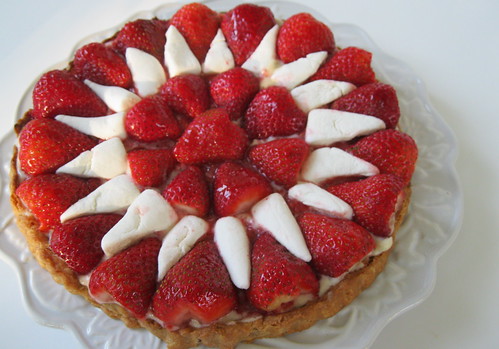
From Paris Sweets: Fresh Strawberry Tart with Marshmallows

Strawberry Tart with Marshmallows adapted from Paris Sweets by Dorie Greenspan

Supply, time and refrigerator capacity challenge the seasonal cook, especially if she is tries to rely on locally grown produce.

Strawberry season was too short, but I always say that.

I was in a quandary this year about what to do with the berries. I knew that if I didn’t make jam I would regret it come, oh, January when the nights are long and the daylight is puny and cold. But to make even three jars of jam the old-fashioned way requires a good two pounds of berries.

That cut into a supply already diminished by the “car-loss factor” which occurs when the driver eats the warm and juicy berries as she drives home from the market.

Timing is especially critical for fresh-berry desserts and it’s tough to decide what to make.

I was on track to make this fresh strawberry tart with marshmallows in June. Instead, I chose another French dessert, one that has been stalking me since I had it at Lenôtre on a sunny Parisian day.

I had to get it out of my head and onto a plate.

Sunday, August 21, 2011

Recipe for Chard Gratin with Parmesan Bechamél and Whole Wheat Bread Crumbs

Red-Stemmed Chard

It was love at first sight.

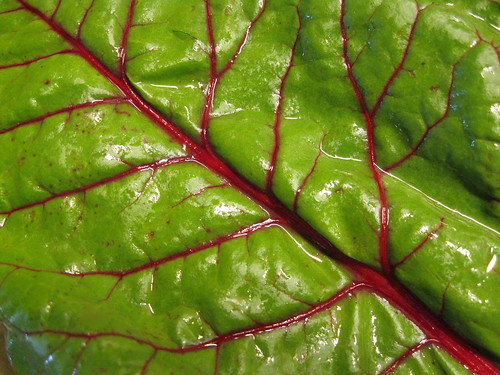
I’m talking about red-stemmed Swiss chard, surely among the most attractive of leafy edibles, with its  ruby stems and veins coursing through a nutritious, deep green landscape.

Red, gold and purple stemmed chards are newer cultivars of the older green-stemmed variety. And from what I’ve read in various sources, there is nothing Swiss about it. Chard originated in the Mediterranean, where the French now call it blette and the Italians bietole. It was a Swiss botanist (Koch) who gave chard its scientific name. Seed catalogs in the 19th Century added the Swiss name to distinguish chard seeds from those of the cardoon because evidently the French were calling both plants carde due to their similar thick stems. (One source of the saga is here.)

When cooked, chard melts into a grayish green shade, retaining little of its former glory. It also bears  flavor that may put off some eaters at first. Chard tastes earthy like its cousin the beet. Perfect for a gratin.


Thursday, August 4, 2011

Summer Cake with Cornmeal and Amaretto Peaches, Plus a Second Variation

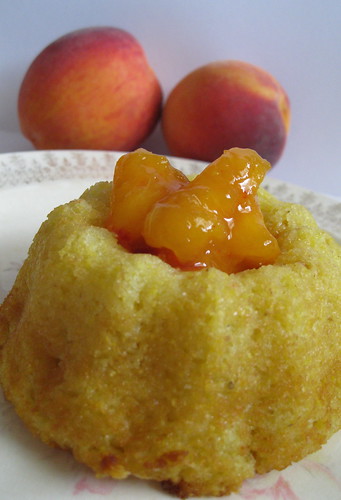
Summer Cake with Cornmeal and Amaretto Peaches
Thinking about this cake was almost as fun as baking and tasting.

Abby Dodge offered a Twitter #baketogether challenge for July and I enjoyed pondering variations of her recipe. I’d think about it while washing dishes, exercising, eating other meals. I know I’m not the only one whose mind wanders in this way.

My version substitutes locally produced cornmeal for half of the flour. You could call this a very sweet and moist cornbread. For a frame of reference, this cake is more moist than an Italian polenta cake tends to be.

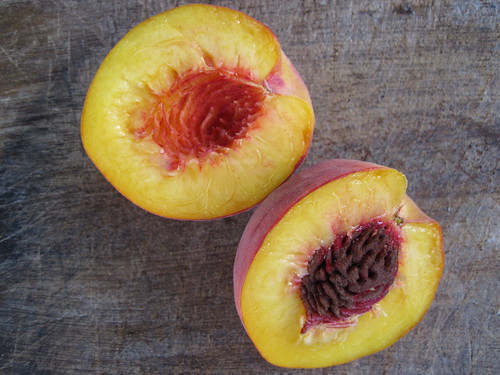
For the fruit, I selected peaches because I love how the flavor deepens after baking. The peaches hail from Missouri because I’m told peaches do not grow so well in Iowa. (Iowa State University, would you please get on that and develop some Iowa peaches?)


Related Posts Plugin for WordPress, Blogger...